Does Ceramic Coating Prevent Rock Chips? What Maryland Drivers Need to Know
Ceramic coating has become one of the most talked-about vehicle protection options in the automotive care industry. From deep gloss to easier cleaning, it offers clear benefits for vehicle owners who want their car to look better for longer. However, one of the most common questions drivers ask is whether ceramic coating can actually prevent rock chips.
If you drive regularly in Maryland, especially around Baltimore, Towson, White Marsh, or along major highways, rock chips are not a hypothetical concern. They are a daily reality. Understanding what ceramic coating can and cannot do is critical before investing in any type of paint protection.
This guide breaks down the truth behind ceramic coatings, explains why rock chips occur, and outlines the most effective ways to protect your vehicle long term.
What Ceramic Coating Is Designed to Do
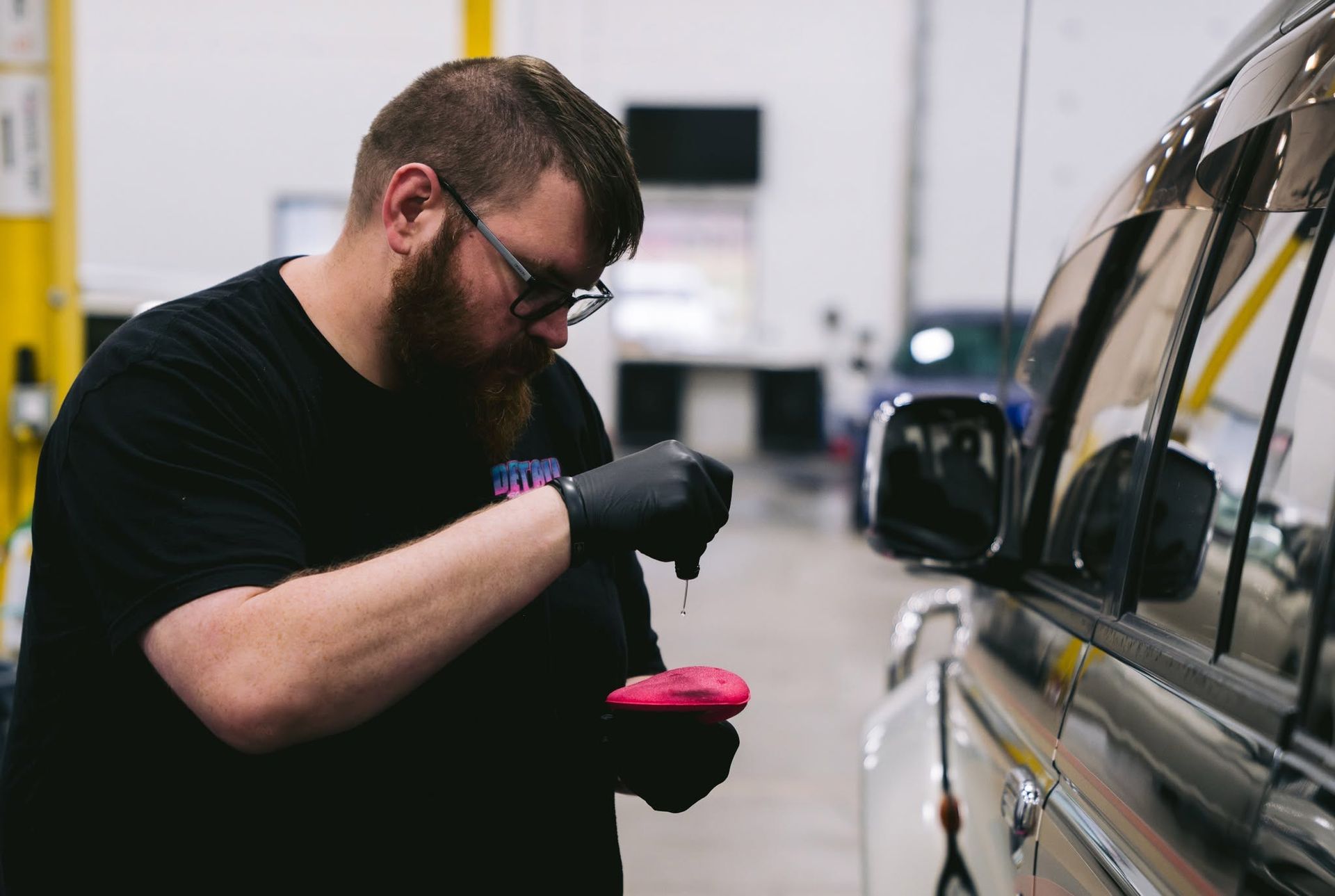
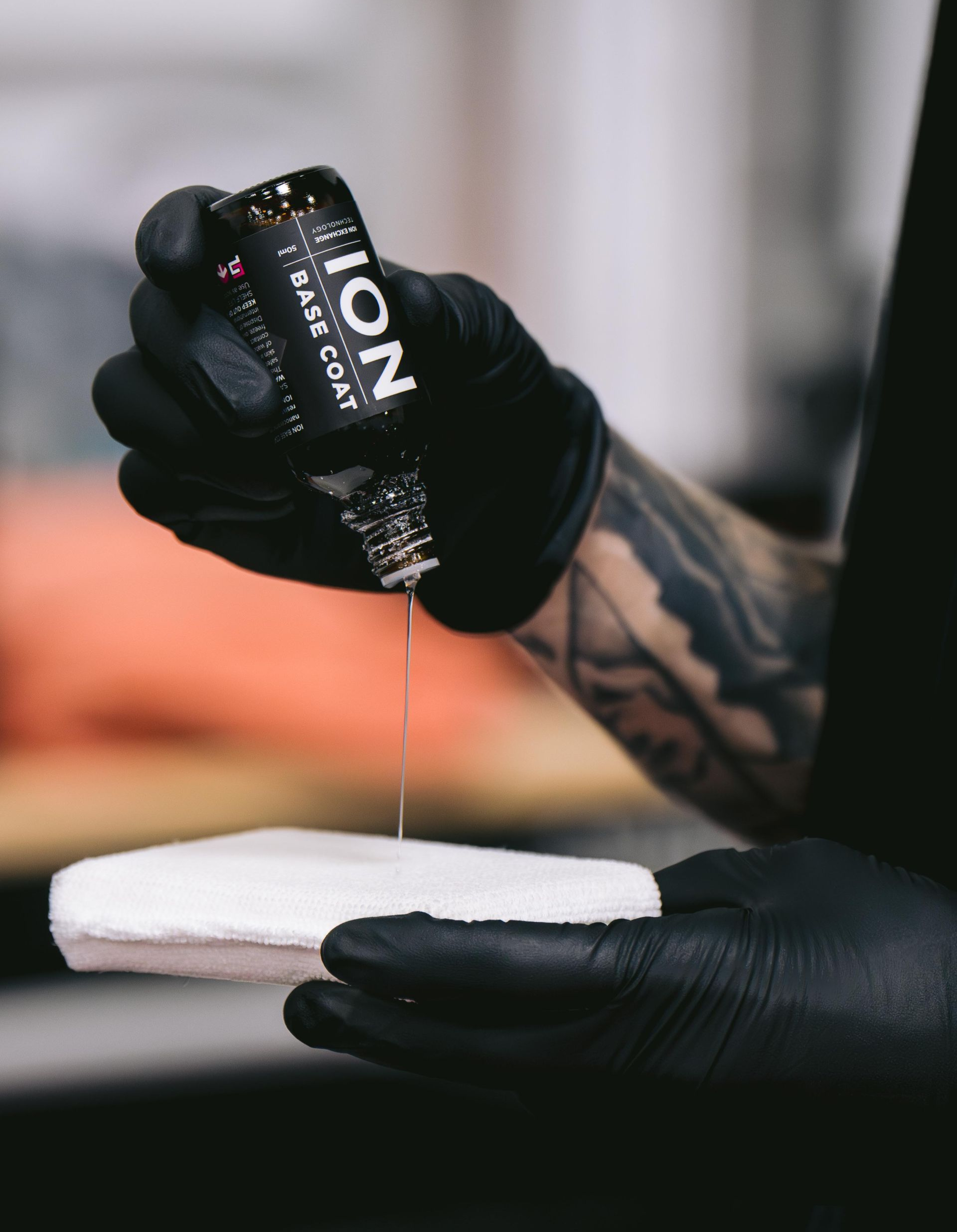
Ceramic coating is a liquid polymer applied to a vehicle’s exterior that chemically bonds with the factory clear coat. Once cured, it creates a smooth, glossy surface that enhances appearance and improves resistance to environmental damage.
Key benefits of ceramic coating include:
- Enhanced gloss and depth of paint color
- Hydrophobic properties that repel water and dirt
- Protection against UV fading and oxidation
- Resistance to chemical contaminants like road salt and bird droppings
- Easier maintenance and washing
For daily drivers throughout Baltimore, Essex, Perry Hall, and surrounding areas, ceramic coating can significantly reduce how quickly a vehicle looks worn or neglected.
However, ceramic coating is not designed to absorb physical impact.
Why Ceramic Coating Does Not Stop Rock Chips
Rock chips occur when small debris strikes your vehicle at high speed. The force created by highway driving, construction zones, or winter road conditions is far greater than what a thin surface coating can withstand.
Ceramic coatings are measured in microns, not millimeters. Even multiple layers remain extremely thin when compared to the thickness required to absorb or deflect physical impacts.
There is also a common misunderstanding around hardness ratings. Ceramic coatings are often marketed as “hard” or “scratch resistant,” but hardness relates to resistance against minor surface abrasions, not blunt force impact. A small stone hitting your hood at highway speed will still penetrate the clear coat, regardless of whether ceramic coating is applied.
In short, ceramic coating helps preserve paint condition, but it does not prevent rock chips.
The Real Solution for Rock Chip Protection: Paint Protection Film
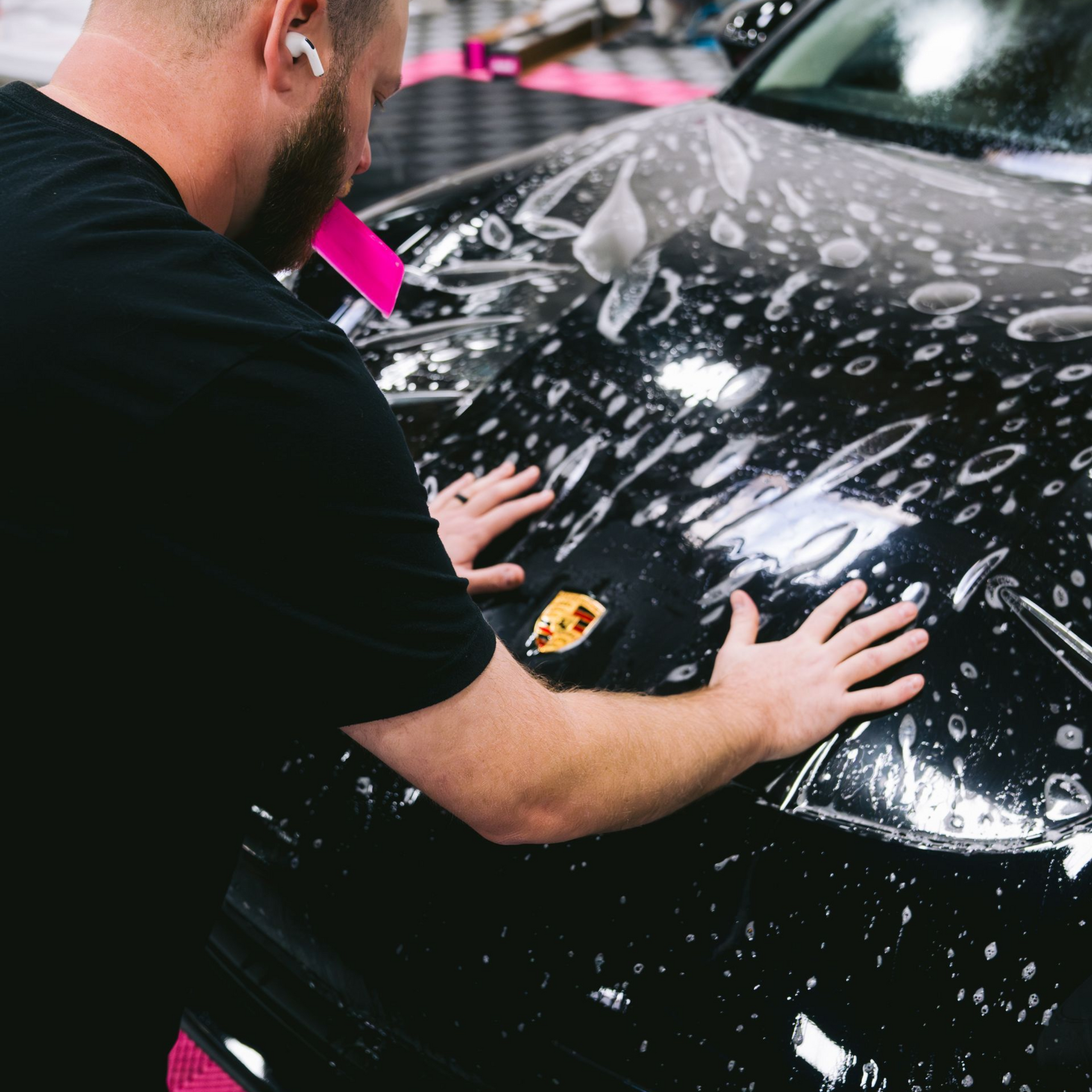
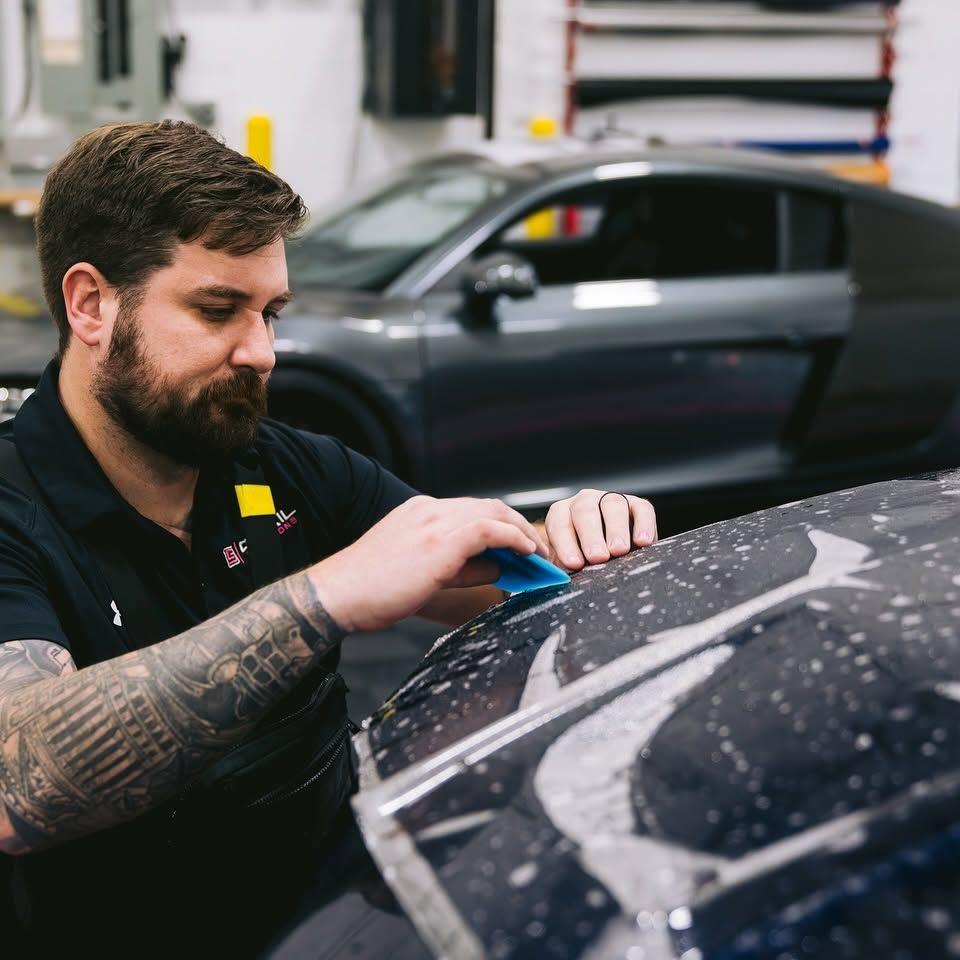
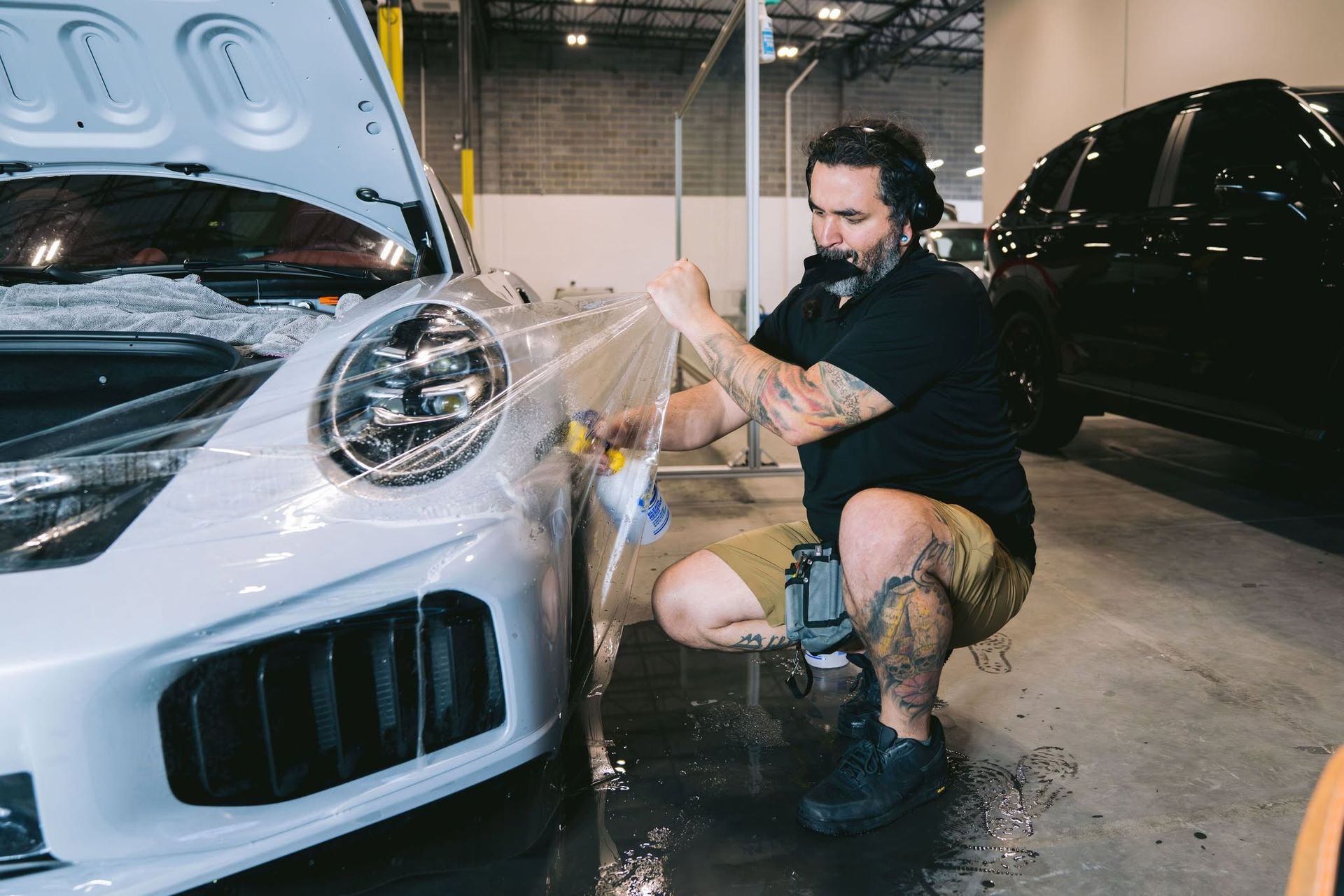
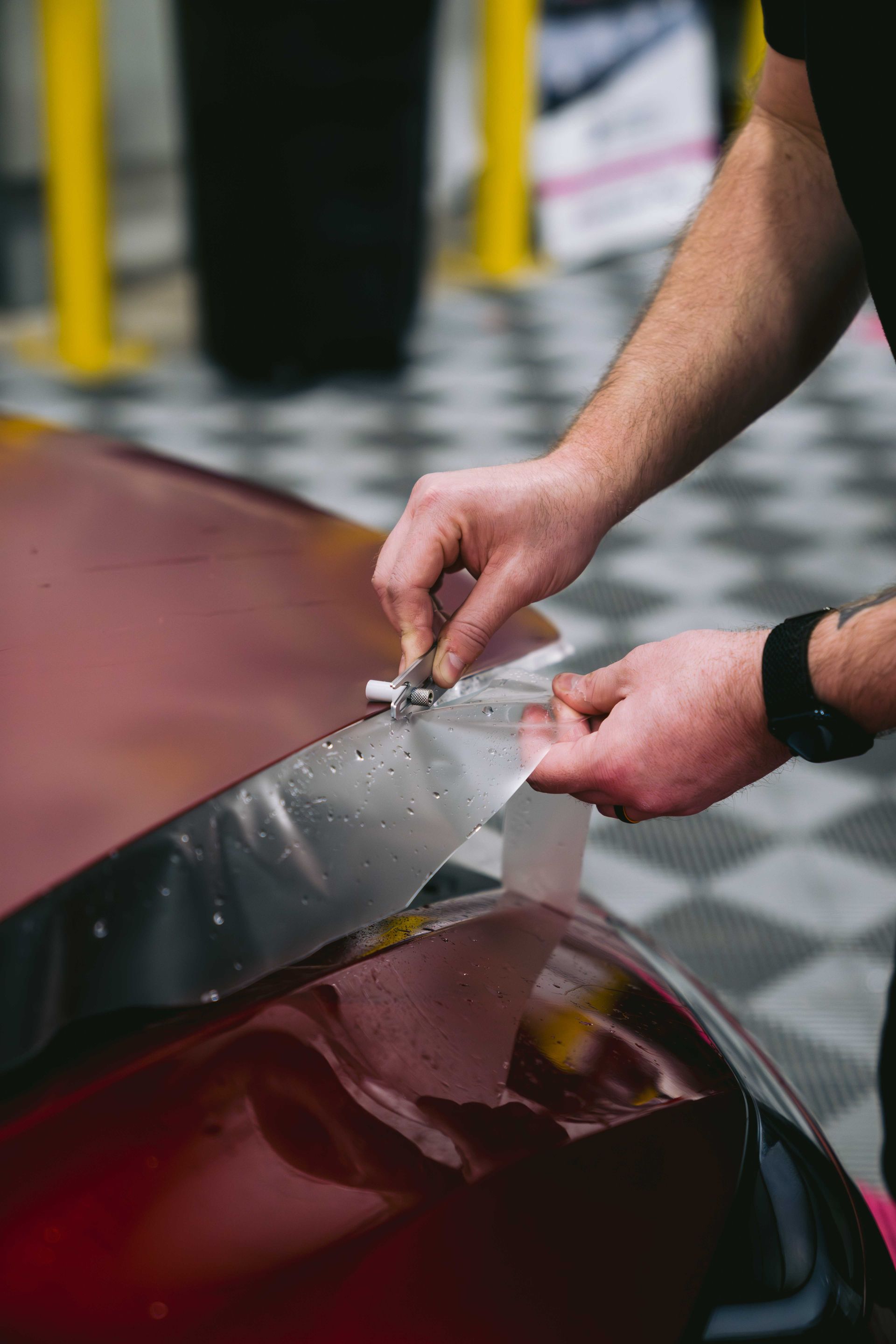
Paint Protection Film, commonly referred to as PPF, is a clear, flexible urethane film that is physically bonded to the vehicle’s paint. Unlike ceramic coating, PPF is engineered specifically to absorb impact.
PPF works by:
- Acting as a sacrificial barrier between paint and debris
- Absorbing and dispersing impact energy
- Preventing chips, scratches, and abrasion damage
- Self-healing minor surface marks when exposed to heat
For Maryland drivers who frequently commute through Baltimore, Towson, Nottingham, or Hunt Valley, PPF provides meaningful protection where ceramic coating cannot.
Common PPF coverage options include:
- Partial front-end protection
- Full front-end protection
- High-impact areas like rocker panels, mirrors, and door edges
- Full vehicle coverage for maximum protection
Ceramic Coating and PPF Work Best Together
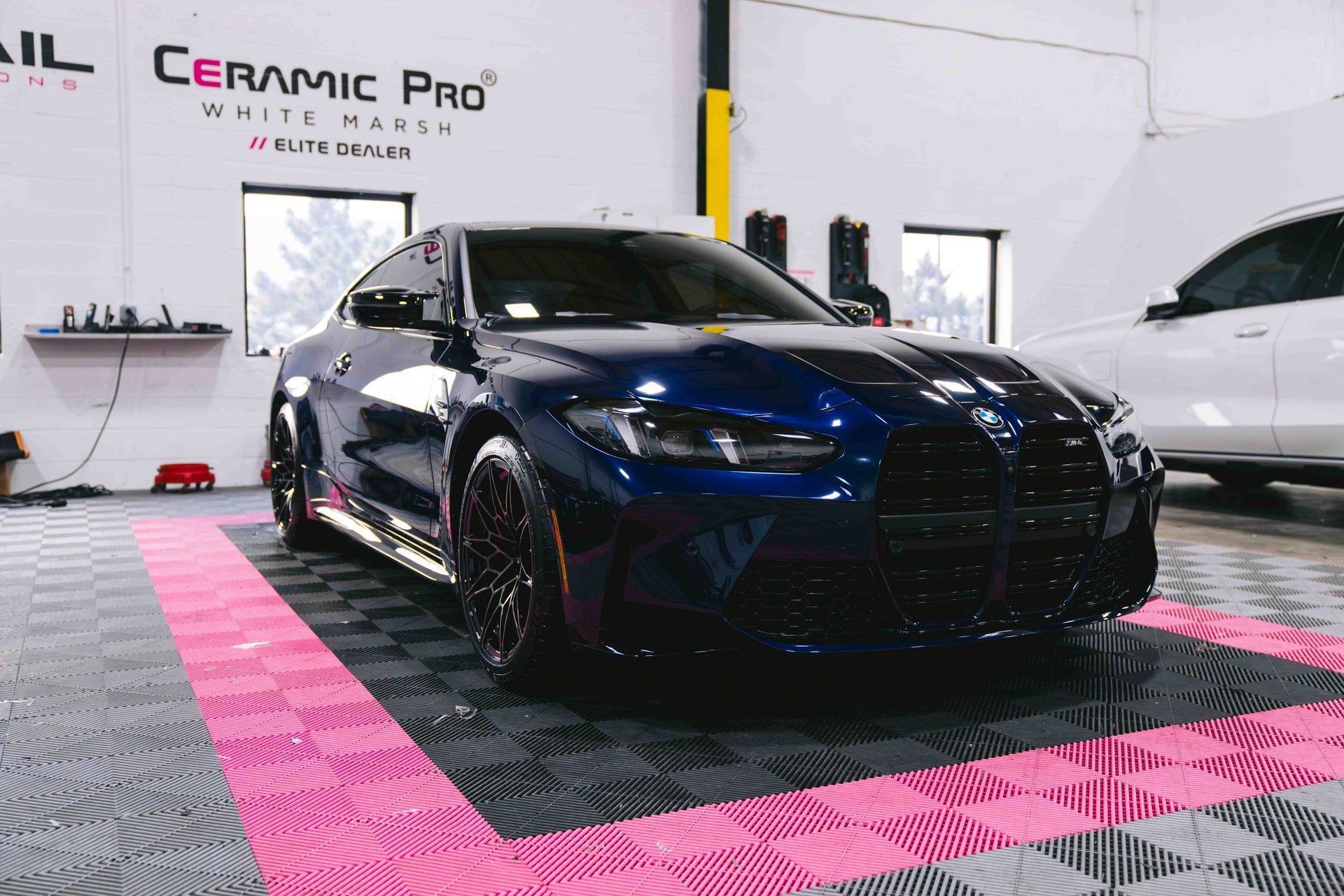
While ceramic coating does not stop rock chips on its own, it still plays an important role in a complete protection strategy.
Applying ceramic coating over PPF enhances performance by:
- Adding hydrophobic properties to the film
- Making the vehicle easier to clean
- Preventing staining and discoloration of the film
- Improving overall gloss and finish
This combined approach is especially effective for drivers who want both long-term paint preservation and a consistently clean appearance.
Where Rock Chips Most Commonly Occur
In the Baltimore metro area, certain vehicle surfaces are far more vulnerable to rock chip damage than others. These include:
- Front bumper and grille
- Hood and hood edges
- Side mirrors
- Rocker panels
- Lower door sections
Vehicles that frequently travel on highways, construction routes, or winter-treated roads face a higher risk. Addressing these areas with PPF early can prevent costly paint repairs later.
How to Maintain Ceramic Coating and PPF Properly
Proper care ensures both ceramic coating and PPF perform as intended for years.
Maintenance best practices include:
- Washing with pH-neutral automotive shampoo
- Avoiding automatic brush car washes
- Removing contaminants promptly
- Using soft microfiber towels for drying
- Scheduling periodic inspections
For drivers in Essex, Middle River, Fallston, and Bel Air, seasonal maintenance is especially important due to road salt and changing weather conditions.
Is Ceramic Coating Still Worth It?
Absolutely. Ceramic coating delivers real value when expectations are set correctly. It improves appearance, simplifies maintenance, and protects against environmental damage. It just should not be relied on as impact protection.
If rock chip prevention is a priority, ceramic coating should be paired with paint protection film rather than used alone.
Protect Your Vehicle with Detail Solutions
At Detail Solutions, we help drivers throughout Baltimore, Essex, Perry Hall, White Marsh, Towson, Owings Mills, Nottingham, Hunt Valley, Bel Air, Middle River, and Fallston choose the right protection for their vehicle and driving habits.
Our team specializes in:
- Professional ceramic coating applications
- Paint Protection Film installation
- Customized protection packages
- Long-term paint preservation strategies
If you want to protect your vehicle from rock chips while keeping it looking its best, our team is here to help.
Contact Detail Solutions today to schedule a consultation or request a personalized protection quote.