Why Repainted Panels Need Extra Attention Before PPF Installation
A freshly repaired bumper or fender can look as good as new, but that does not automatically mean it is ready for paint protection film (PPF). Repainted panels require additional inspection because their curing process, surface preparation, and paint adhesion may differ from factory finishes.
For drivers in Baltimore, White Marsh, and surrounding Maryland communities, PPF helps protect vehicle paint against road debris, rock chips, and everyday driving hazards.
At Detail Solutions, we provide professional paint protection film installation using LLumar products. Before applying PPF to a repainted panel, we consider the paint's condition, curing requirements, and potential installation risks.
Can You Install PPF on Repainted Panels?
Yes, paint protection film can sometimes be installed on repainted panels, provided the paint has fully cured, the finish is properly bonded, and the surface is suitable for installation.
However, repainted surfaces carry additional risks. Weak paint adhesion may lead to lifting during film removal, while incomplete curing can affect installation results.
LLumar recommends waiting for freshly applied paint to outgas and identifies 30 days as a common waiting period. The appropriate timeline depends on the paint system and body shop recommendations.
Importantly, LLumar's manufacturer warranty does not cover issues involving aftermarket or repaired paint. Always confirm the repair's condition before proceeding.
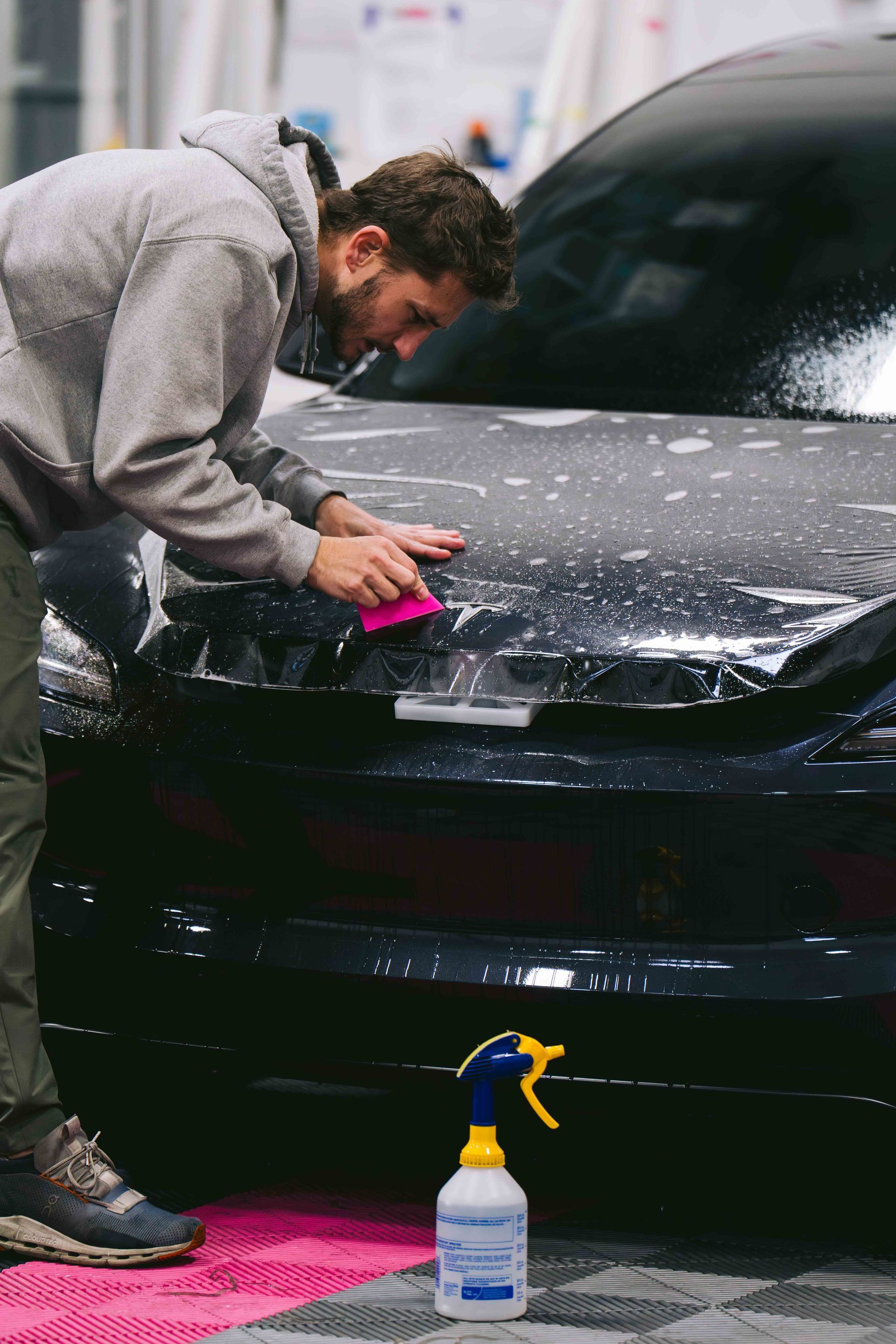
Why Repainted Panels Differ From Factory Paint
Factory paint is applied and cured under controlled manufacturing conditions. Repainted panels undergo a separate refinishing process, which may involve sanding, primer, color application, and clear coat.
Several factors can affect the finished surface:
- Incomplete curing: Fresh paint may appear dry while solvents are still escaping.
- Surface imperfections: Sanding marks, dust particles, and uneven clear coat may remain visible beneath transparent film.
- Adhesion concerns: Improperly prepared paint may lift when film is removed.
PPF creates a protective barrier against minor road debris and environmental exposure, but it cannot correct underlying paint defects.
Understanding these differences helps prevent avoidable problems during installation and removal.
How Long Should You Wait Before Applying PPF to Repainted Paint?
Paint curing time depends on the refinishing products, application process, temperature, and whether the repair was baked or air-dried.
Although 30 days is commonly referenced, no universal waiting period guarantees that every repainted surface is ready for PPF.
Before scheduling installation, ask your body shop:
- What paint system was used?
- When was the repair completed?
- Was the paint baked or air-dried?
- Has the paint fully cured and been approved for adhesive film?
Share this information with our team at Detail Solutions. Waiting allows additional curing time, but it cannot resolve poor surface preparation or weak paint adhesion.
What Should Be Inspected Before PPF Installation?
A repainted panel should be inspected for defects that could affect film appearance, adhesion, or future removal.
At Detail Solutions, we evaluate visible surface conditions before recommending installation.
Common concerns include uneven paint texture, raised repair edges, sanding marks, peeling clear coat, and exposed primer.
For example, a bumper repaired after a parking accident may have a slight texture difference near the corner. Once transparent film is installed, that irregularity may become more noticeable.
Paint thickness measurements can provide additional information, but they cannot independently confirm paint adhesion.
Avoid testing the repaired surface using tape, scraping tools, or harsh chemicals. These methods may damage the finish.
When Should PPF Installation Be Delayed?
Not every repaired panel is suitable for immediate protection.
Installation should be postponed when paint remains uncured, clear coat is lifting, or visible defects indicate an incomplete repair.
If these problems appear, returning to the body shop for evaluation is generally more appropriate than attempting to cover them with film.
A professional inspection helps determine whether additional refinishing work is necessary before installation.
How We Prepare Repainted Panels for PPF
Proper surface preparation is essential for a clean, professional installation.
Our process includes washing, removing surface contamination, evaluating paint condition, and preparing the panel for film application.
Wax, polishing residue, silicone, and other contaminants can interfere with adhesion.
Paint correction may also be considered when appropriate. However, polishing removes a small amount of clear coat, so freshly repaired finishes require particular caution.
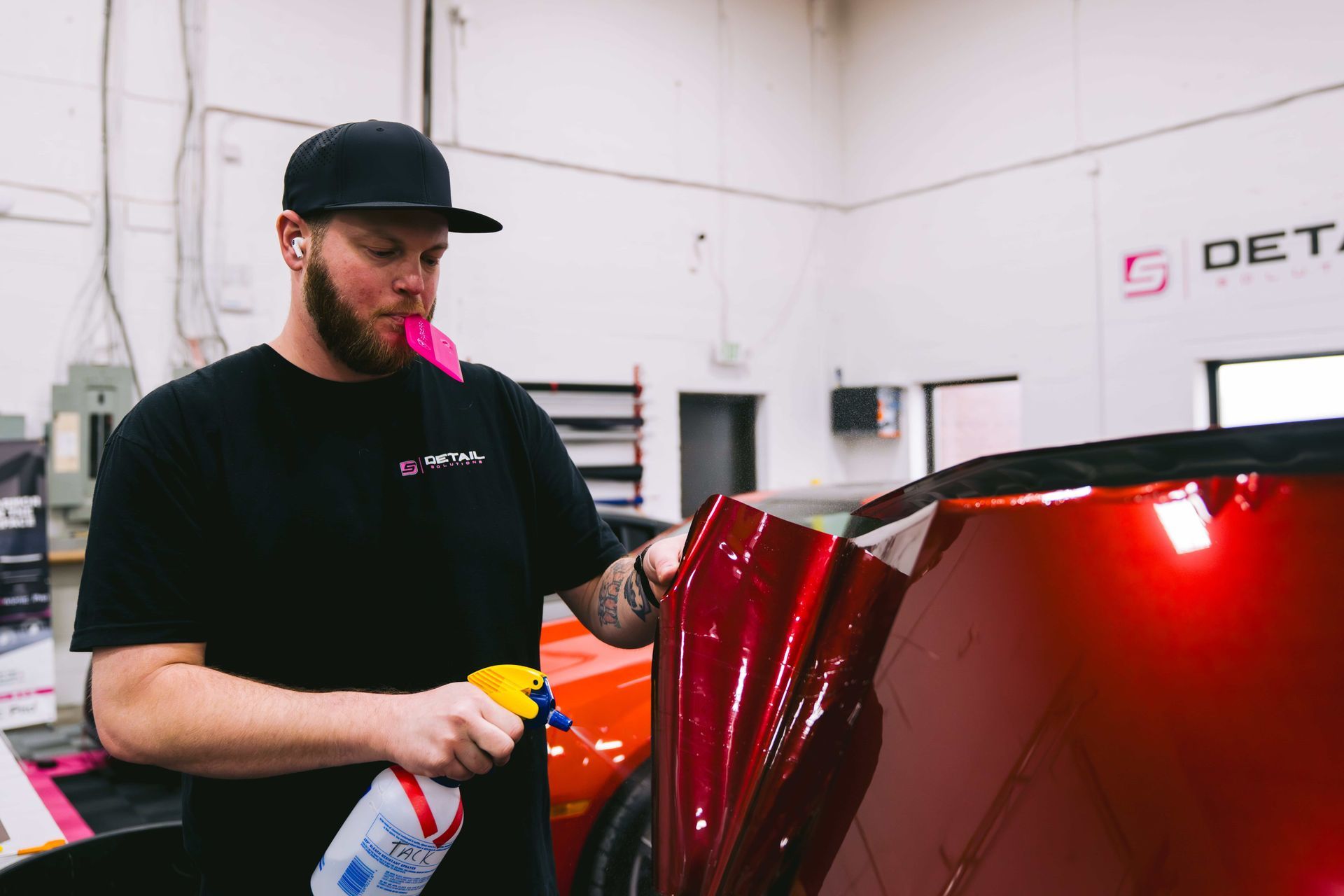
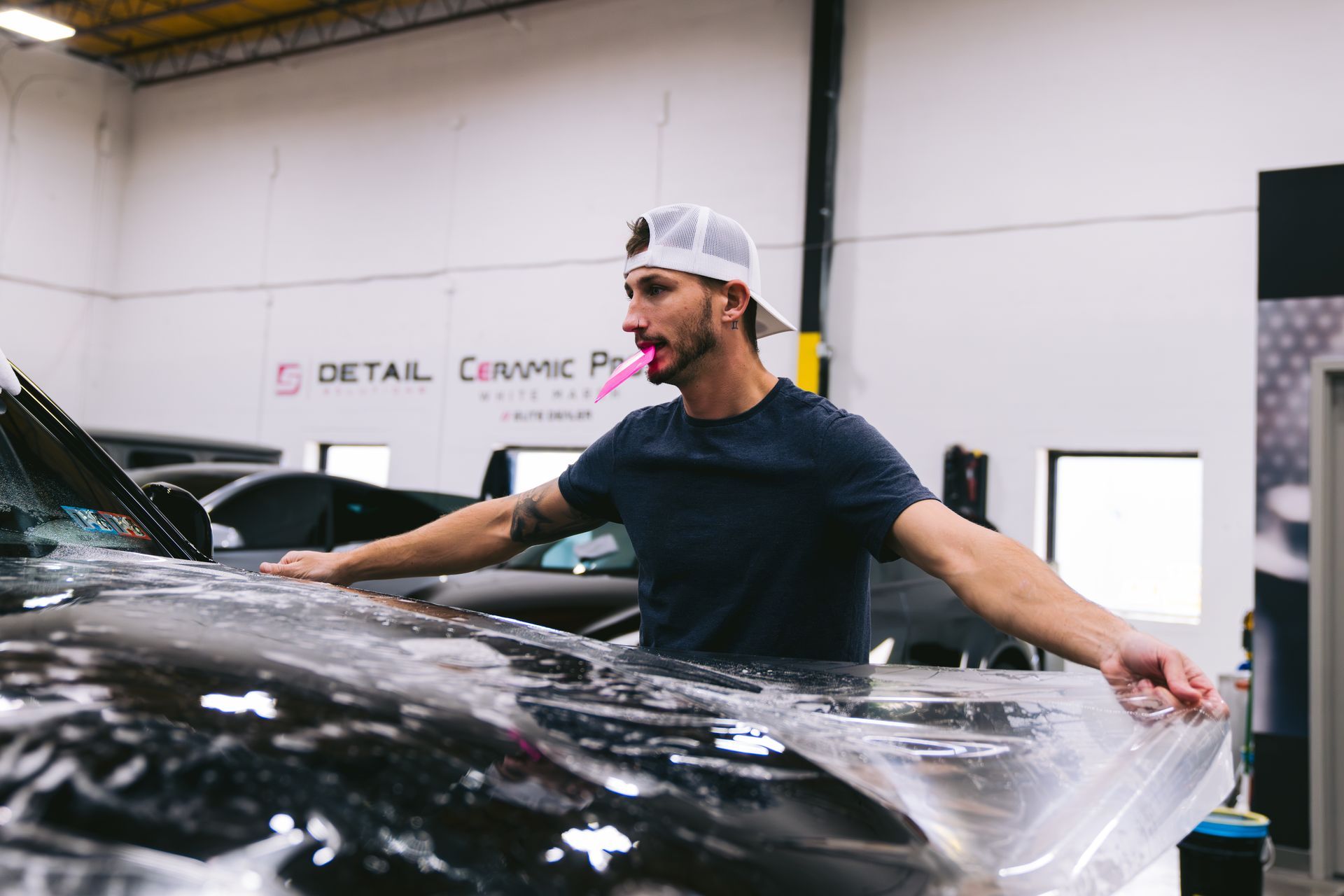
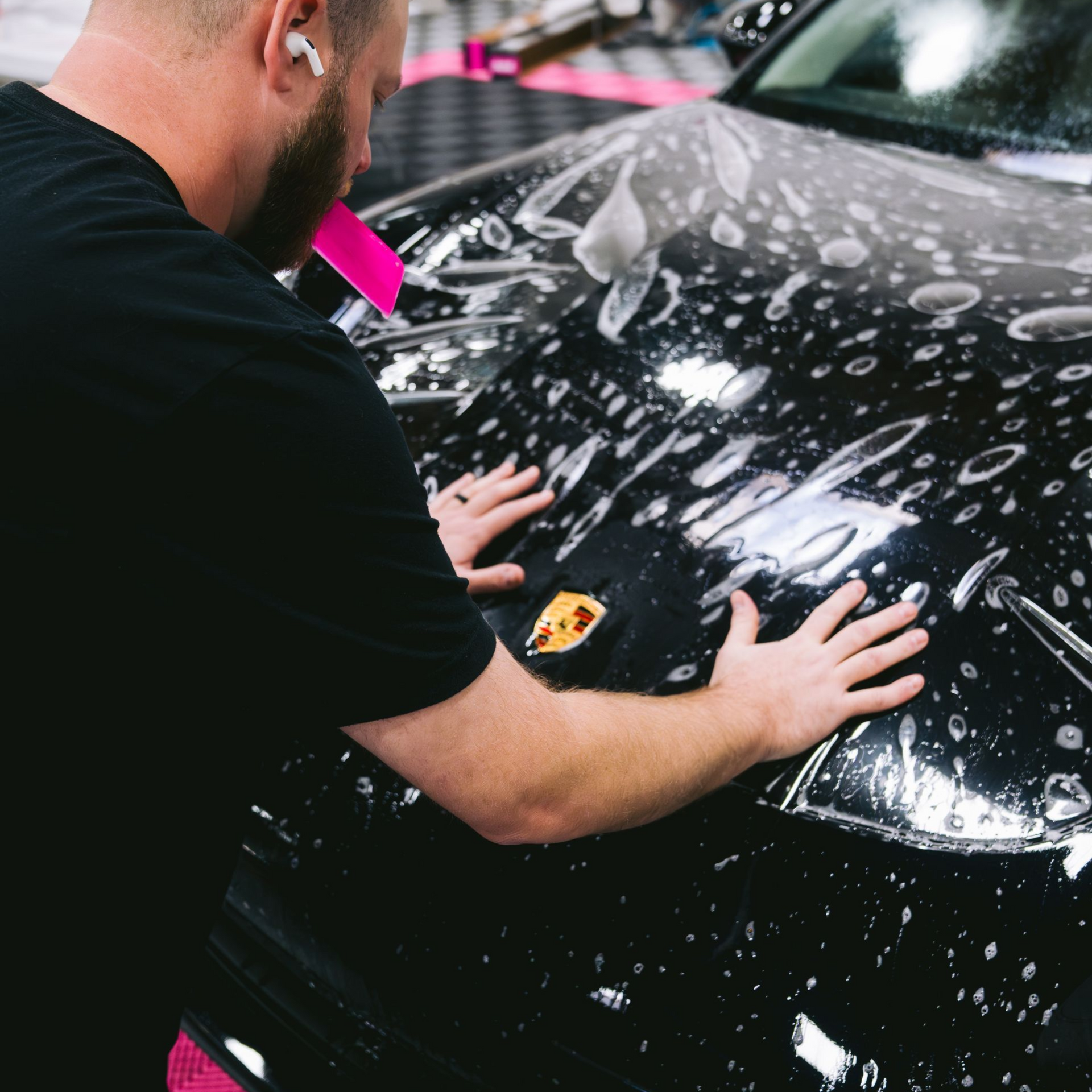
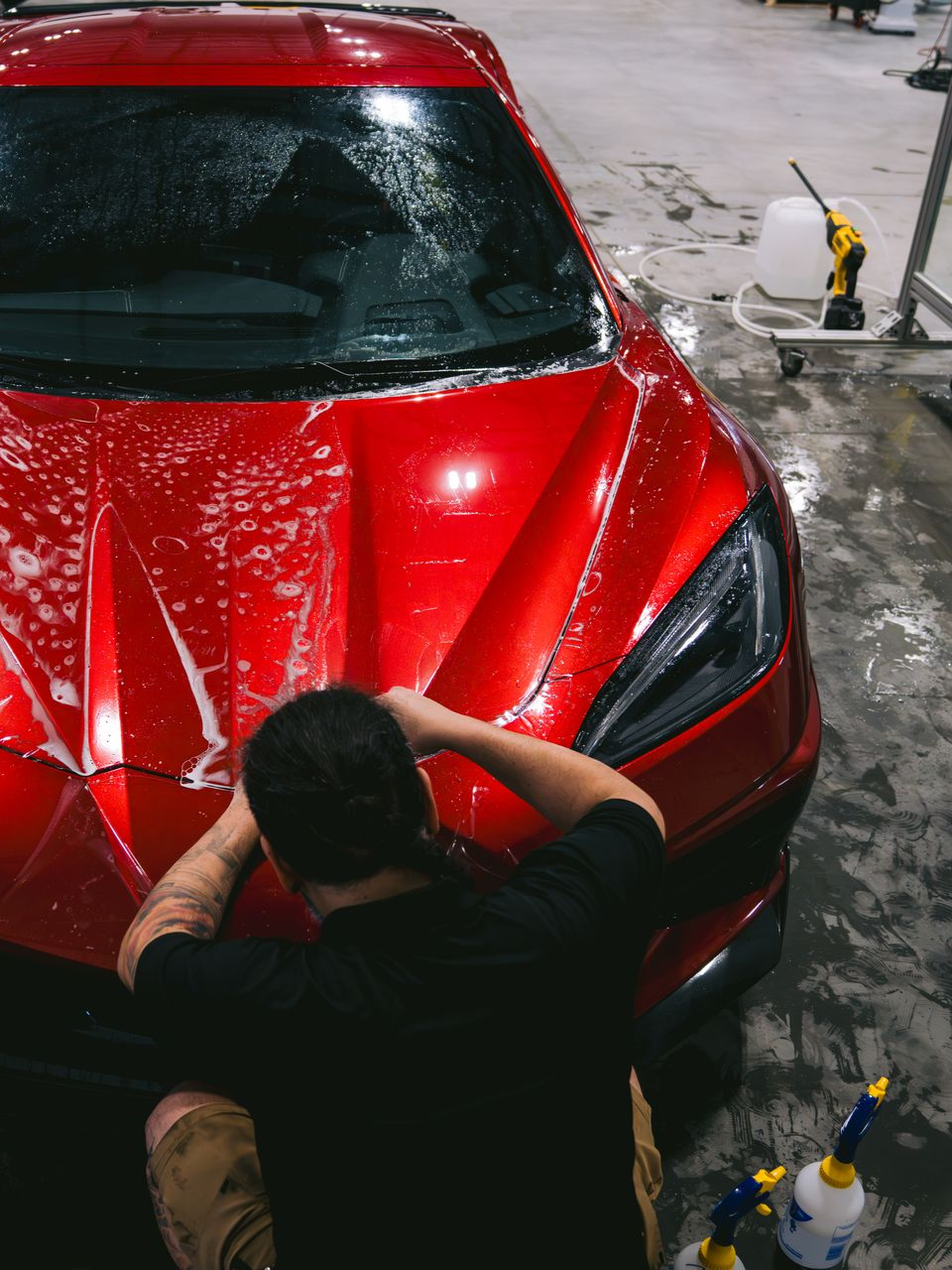
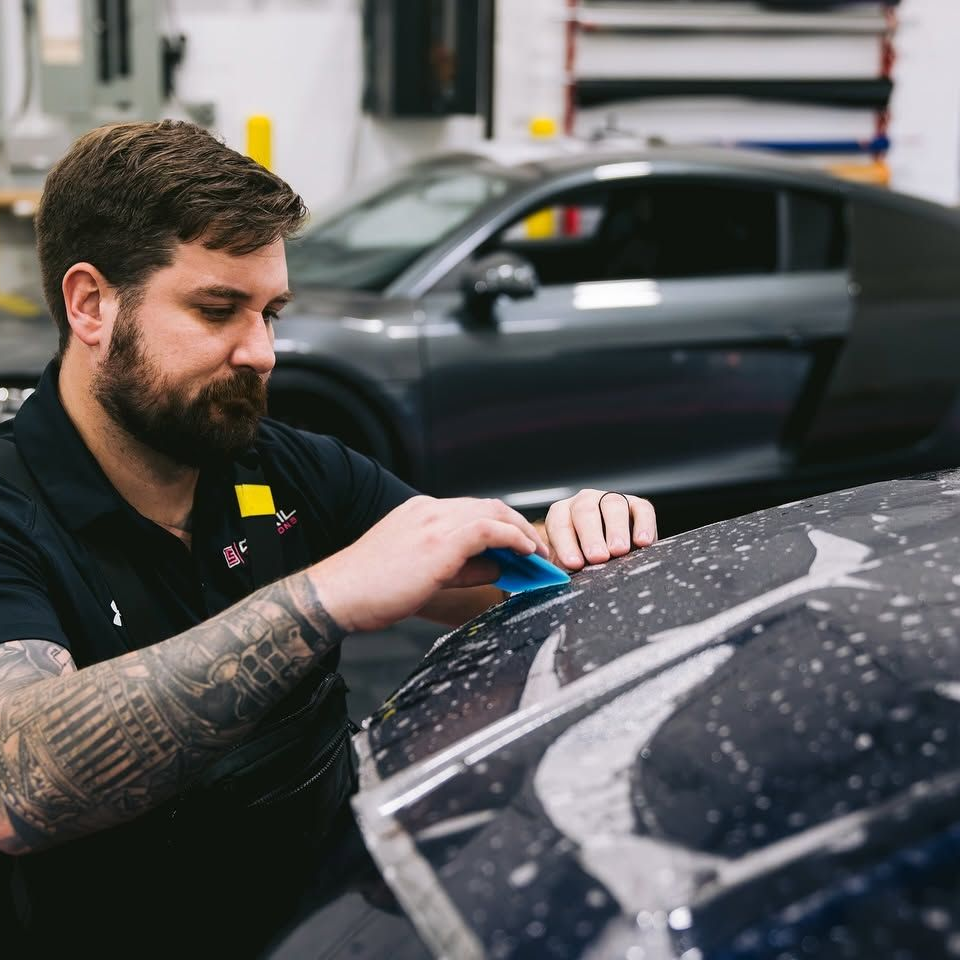
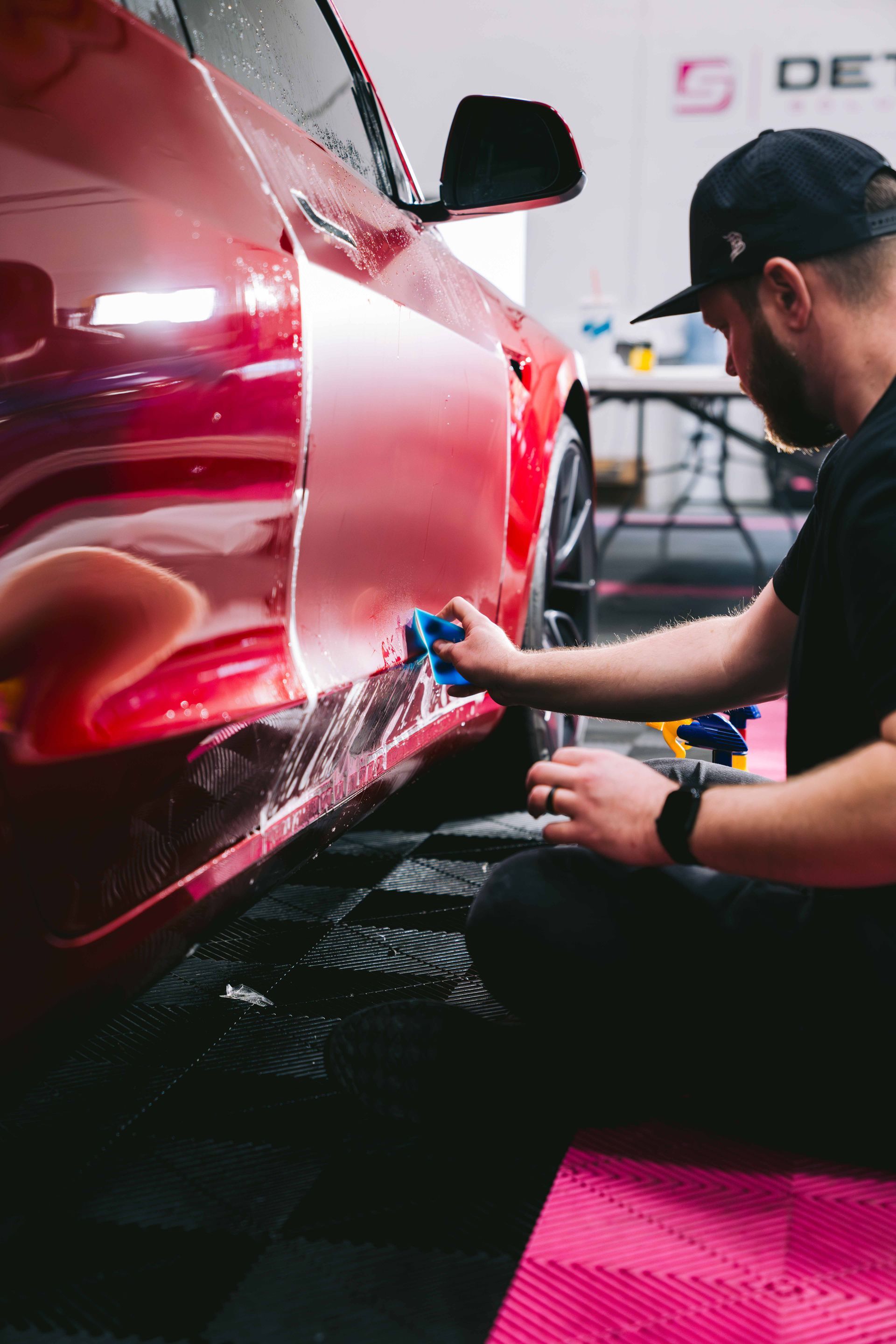
Once the surface is suitable, our installers carefully position the film, manage application moisture, remove trapped air, and inspect the finished edges.
Why Film Edges and Repair Lines Matter
Film edges require careful positioning, particularly around bumpers, fenders, mirrors, and previously repaired sections.
Uneven paint transitions may affect how smoothly the film conforms to the surface. Contamination, improper positioning, or excessive tension can also contribute to edge lifting.
Our installation process emphasizes accurate fitting, careful application, and attention to visible boundaries.
Although professional installation improves the finished appearance, it cannot eliminate defects already present beneath the film.
Understanding PPF Removal and Warranty Limitations
Paint protection film is removable, but removing it from repainted surfaces involves additional considerations.
If the underlying paint was poorly bonded, film removal may cause paint or clear coat to lift.
LLumar's manufacturer warranty excludes issues involving aftermarket or repaired paint. Customers should discuss the applicable film warranty, installation policies, and potential paint-related risks before proceeding.
Keep your body shop invoice, paint system information, curing recommendations, and PPF installation documentation for future reference.
Choosing the Right PPF Coverage
Repaired bumpers, hoods, and fenders are often exposed to road debris during everyday driving around Baltimore County.
At Detail Solutions, our estimated PPF package starting prices include:
- Front Bumper: $850
- Partial Front: $1,250
- Full Front End: $2,200
- Track Pack: $3,000
- Full Body Coverage: $6,200
Final pricing depends on vehicle specifications and coverage requirements.
Explore our LLumar paint protection film options to compare available finishes and protection choices.
What to Bring to Your PPF Consultation
Before visiting Detail Solutions, gather information about the repair, including the completion date, affected panels, paint system, and body shop curing instructions.
Bring your repair invoice if available, and explain whether the work involved body filler, blended paint, or replacement components.
These details help us evaluate installation considerations and discuss appropriate coverage.
Tesla owners can also ask about special pricing and complimentary Level 2 charging during service.
Frequently Asked Questions About PPF on Repainted Panels
Can PPF Damage Repainted Car Paint?
Yes. PPF removal can lift poorly bonded paint or clear coat. Proper curing and professional evaluation help identify potential problems, but cannot eliminate every risk.
Will PPF Hide Paint Imperfections?
No. Transparent paint protection film follows the existing surface. Sanding marks, uneven texture, and other defects may remain visible after installation.
Does LLumar Warranty Cover Repainted Panels?
LLumar states that issues involving aftermarket or repaired paint are excluded from its manufacturer warranty. Confirm applicable terms before installation.
Protect Your Repainted Panels With Detail Solutions in Baltimore, MD
A professional paint repair deserves careful protection. Proper curing, surface inspection, and installation planning help reduce potential complications when applying PPF to repainted panels.
Locally owned and operated since 2011, Detail Solutions provides paint protection film, ceramic coatings, window tinting, and automotive detailing in the Baltimore area.
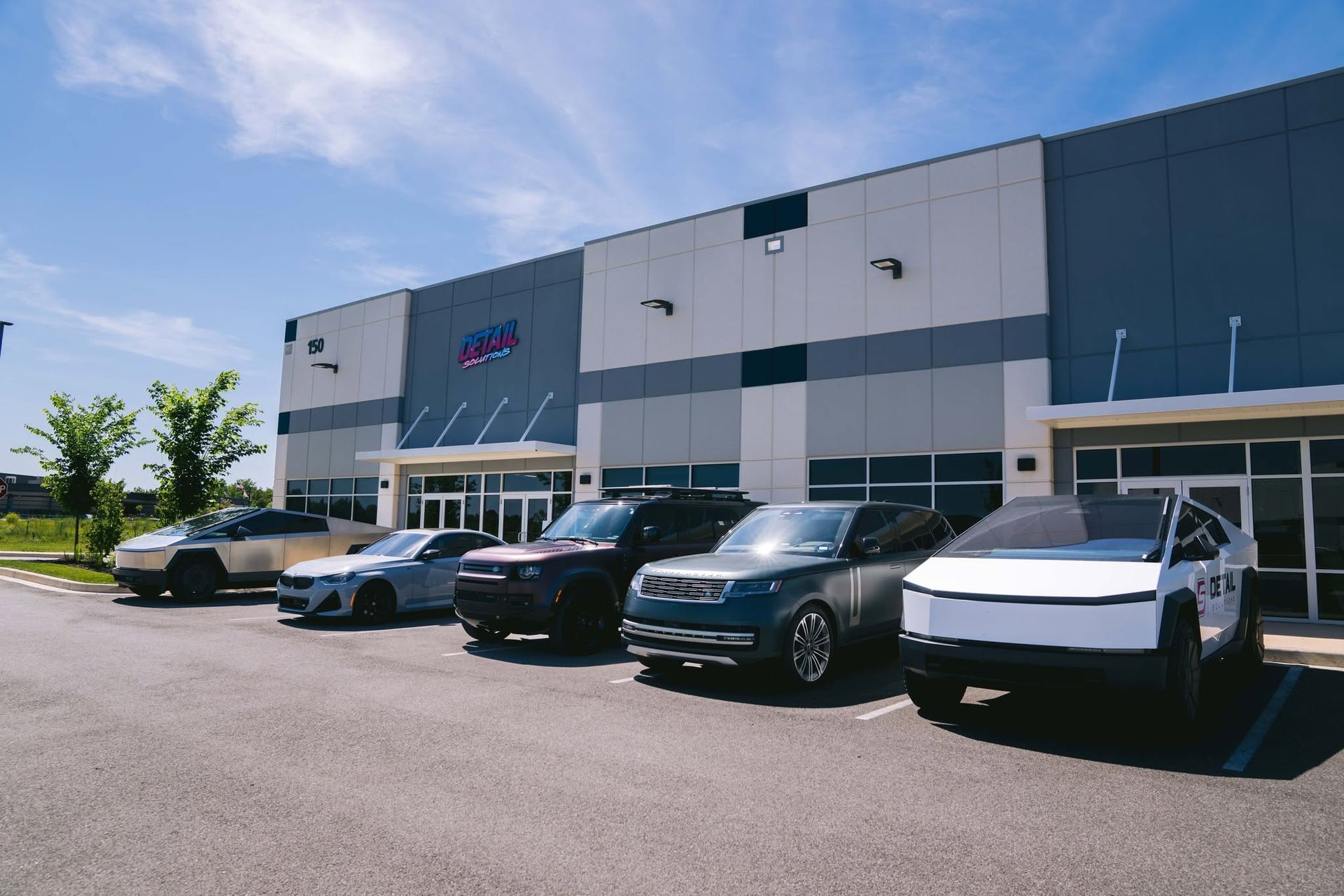
Visit us at 150 Merritt Way, Suite 100, White Marsh, MD, serving Baltimore, Essex, Perry Hall, Nottingham, Towson, Bel Air, Middle River, Owings Mills, Hunt Valley, Fallston, and nearby communities.
Contact Detail Solutions or call
(410) 238-3000 to request a free quote and discuss whether your repaired panels are ready for PPF installation.
Why Paint Correction Matters Before Ceramic Coating
Even garage-kept vehicles can develop light wash-induced marks, oxidation, and other surface imperfections.
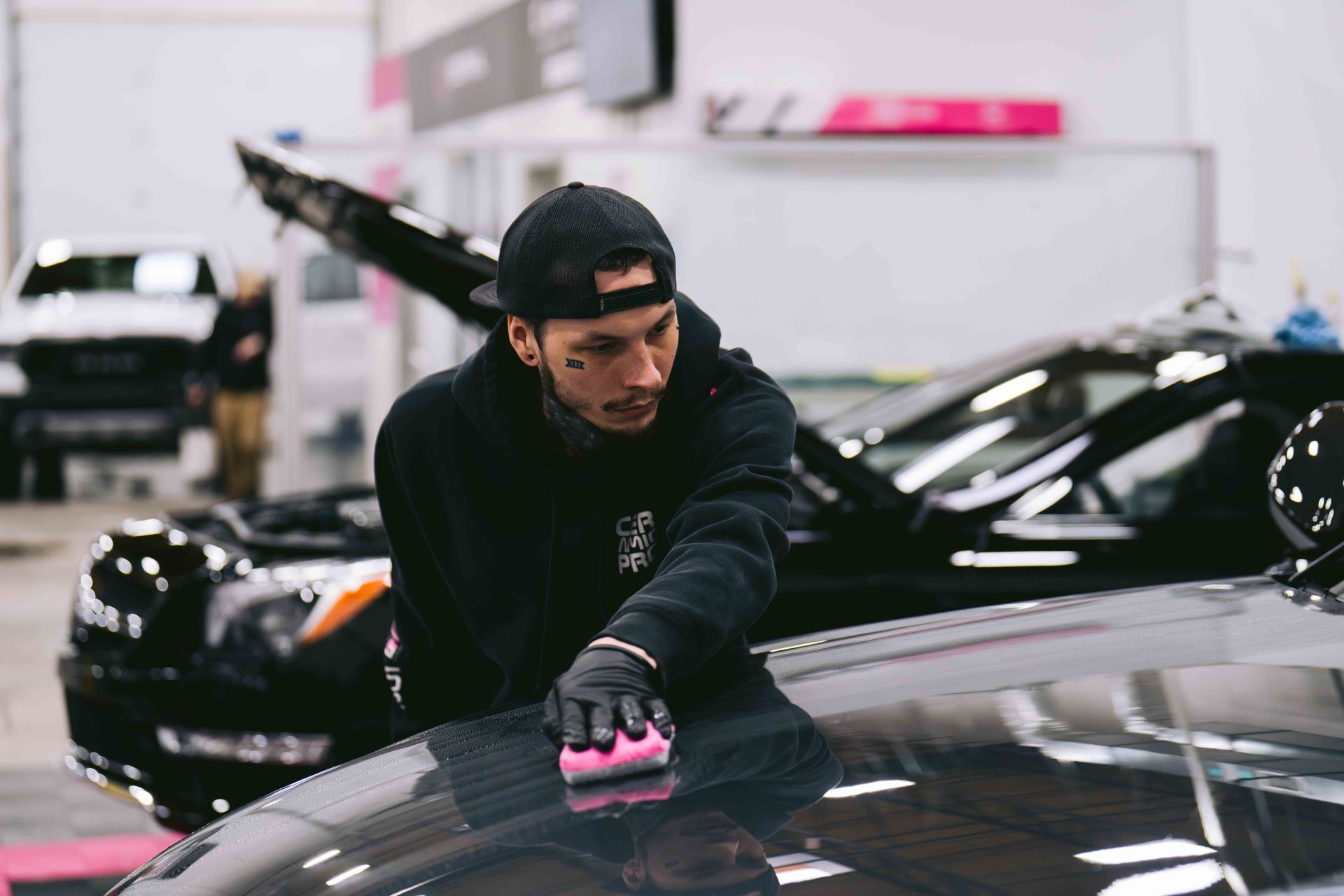
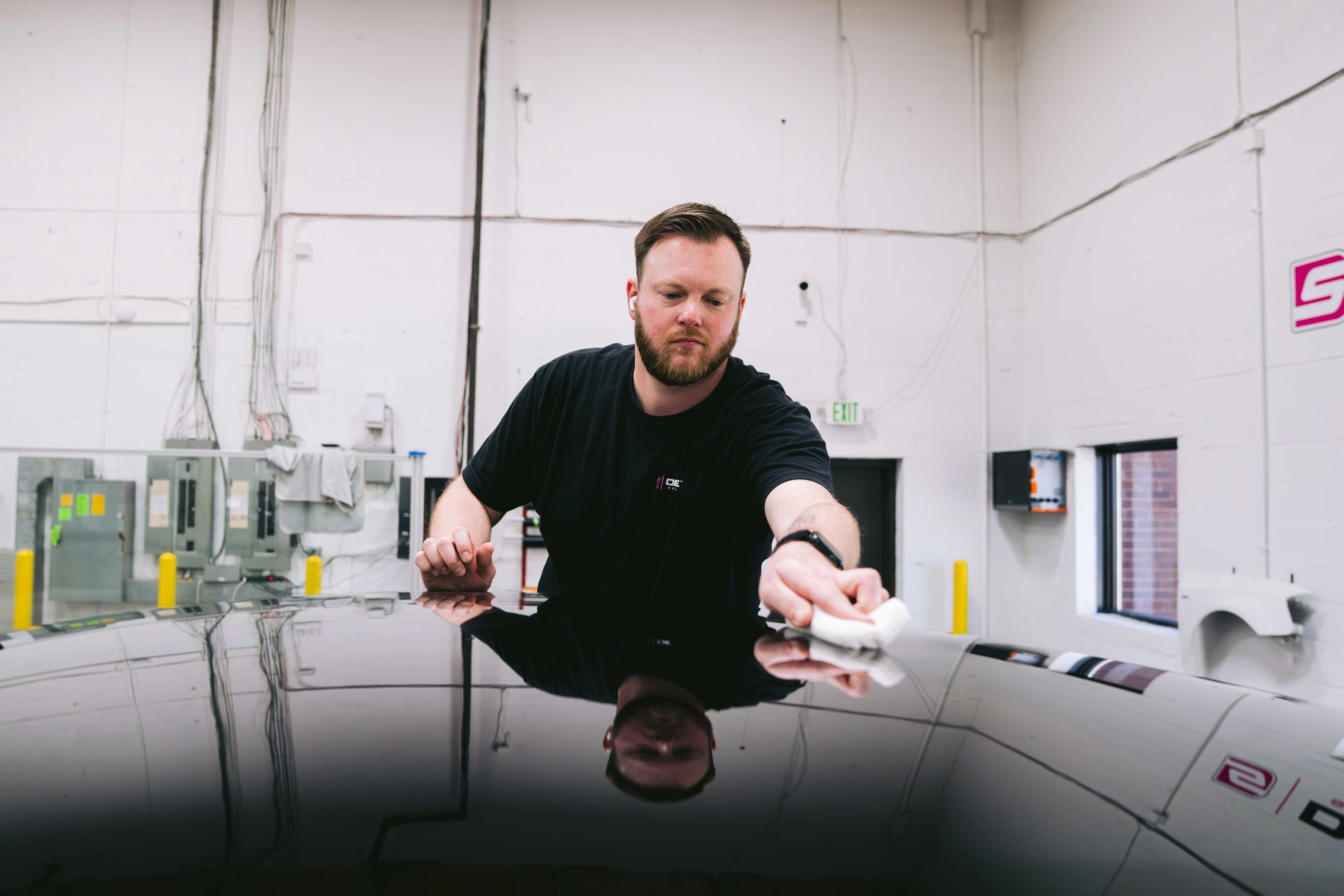
Ceramic coating does not repair existing paint defects. Instead, it bonds to the prepared surface, making proper preparation essential for achieving a consistent finish.
Our ceramic coating preparation process generally includes:
- Signature hand washing
- Surface decontamination
- Paint preparation
- Paint correction polishing when included in the selected package
- Ceramic coating application
- Appropriate curing and aftercare
Choosing the Right Ceramic Coating Package
At Detail Solutions, we offer several ceramic coating packages designed around different protection needs and ownership goals.
- Ceramic LIGHT, starting at $499: An entry-level coating that typically lasts 8 to 12 months, with same-day service.
- American Essentials, starting at $999: A two-year coating package with Level 1 paint correction and protection for additional exterior surfaces.
- American Elite, starting at $1,499: A five-year warranted coating package featuring our proprietary American-made coating.
- Opti Coat Pro 3, starting at $2,999: A four-layer coating system with extended warranty coverage and additional exterior surface protection.
- All American Protection Package, starting at $3,399: Combines full-front paint protection film with full-vehicle ceramic coating.
For vehicles regularly driven on highways, paint protection film provides an additional physical barrier against road debris and rock chips.
Ceramic coating and PPF serve different purposes, and combining them may be appropriate for vehicles requiring both impact protection and easier maintenance.
Warranty conditions, curing requirements, and maintenance recommendations vary by package. Our team can explain the available options before installation.
Caring for Your Ceramic Coating After Installation
Proper maintenance helps preserve the appearance and performance of your coating.
Follow the recommended curing period, wash regularly using suitable automotive products, and remove bird droppings or tree sap promptly.
If the surface becomes less hydrophobic, contamination may be affecting water behavior rather than indicating that the coating has completely failed.
Our blog about ceramic coating failure versus contamination explains when cleaning, decontamination, or professional inspection may be necessary.
Tesla owners can also explore our Tesla ceramic coating services, including special pricing and complimentary Level 2 charging while their vehicles are being serviced.
Frequently Asked Questions About Ceramic Coating for Garage-Kept Cars
Can a garage-kept car still develop swirl marks?
Yes. Improper washing, dry wiping, and contact with accumulated dust can create light surface imperfections. Ceramic coating helps simplify cleaning but does not eliminate the possibility of paint damage.
Does ceramic coating prevent water spots on garage-kept vehicles?
No. Hydrophobic coatings encourage water to bead, but mineral deposits can remain after droplets evaporate. Proper washing and drying are still necessary.
Do garage-kept cars in Baltimore need ceramic coating during winter?
Ceramic coating can be beneficial for vehicles driven during Maryland winters because road salt and grime can accumulate on exposed surfaces. Regular cleaning remains essential for maintaining protection.
Protect Your Garage-Kept Vehicle With Detail Solutions
Keeping your vehicle in a garage is a smart maintenance habit. Professional ceramic coating can complement that protection by enhancing gloss, improving resistance to everyday contaminants, and making routine cleaning easier.
At Detail Solutions, we provide ceramic coating, paint protection film, window tinting, and professional detailing for drivers throughout Baltimore, Essex, Perry Hall, White Marsh, Owings Mills, Nottingham, Hunt Valley, Bel Air, Towson, Middle River, Fallston, and surrounding Maryland communities.
Visit our shop at 150 Merritt Way, Suite 100, White Marsh, MD 21162, or call (410) 238-3000.
Contact Detail Solutions to request a free quote and find the right ceramic coating solution for your garage-kept vehicle.